Polyphenols in Olive Oil: Why They Matter
| ArticlesPolyphenols in Olive Oil
If you've been paying attention to the olive oil world lately, you've probably noticed one word showing up everywhere: polyphenols.
Health influencers talk about them. Nutrition researchers study them. Premium olive oil brands print polyphenol counts on their labels. But what actually are polyphenols in olive oil? Why do they matter? And how do you know if the bottle in your kitchen has enough of them to make a difference?
This guide answers all of that. No jargon, no hype, just the science and the practical advice you need to make smarter choices.
What Are Polyphenols in Olive Oil?
Polyphenols are natural plant compounds that act as powerful antioxidants. They're found in many foods, berries, dark chocolate, green tea, red wine, but extra virgin olive oil contains a unique set of polyphenols that you won't find anywhere else in the human diet.
Think of polyphenols as the olive's natural defense system. The olive tree produces them to protect its fruit from UV radiation, pests, disease, and oxidation. When you consume high-quality EVOO, you're essentially borrowing that protection for your own body.
The key polyphenols found in extra virgin olive oil include:
- Oleocanthal, the compound responsible for the peppery, throat-stinging sensation in fresh EVOO. Researchers have compared its anti-inflammatory effect to ibuprofen (Polyphenols in Olive Oil)
- Oleacein, a potent antioxidant with demonstrated cardioprotective properties (Polyphenols in Olive Oil)
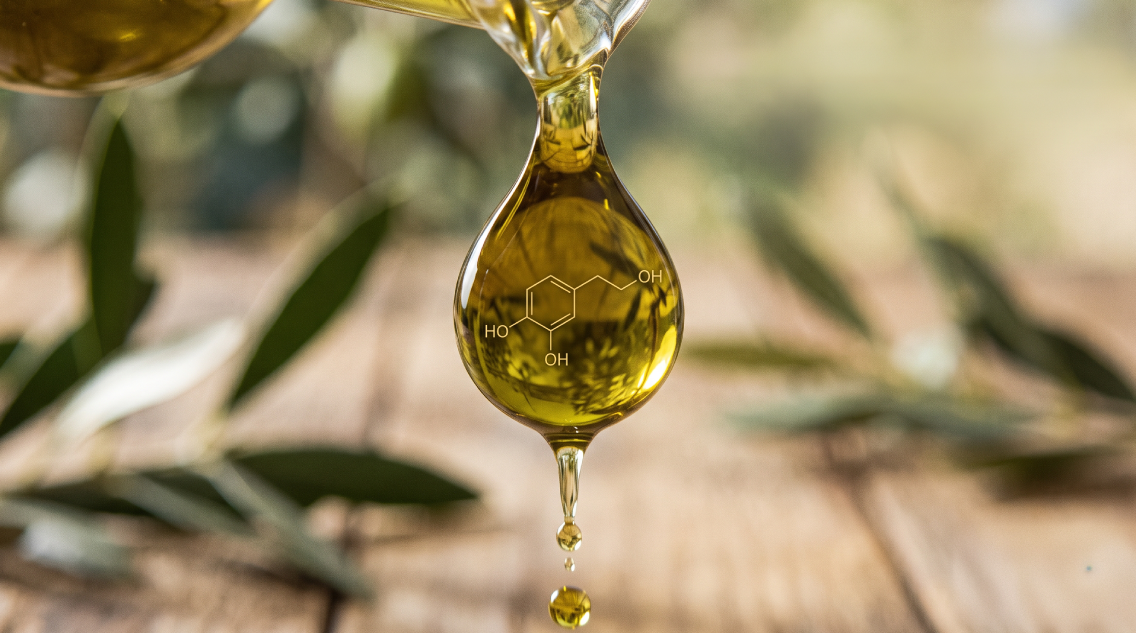
- Hydroxytyrosol, considered one of the most powerful antioxidants found in nature, with documented effects on heart health, skin aging, and cellular protection (Polyphenols in Olive Oil)
- Tyrosol, a more stable antioxidant that contributes to olive oil's long shelf life (Polyphenols in Olive Oil)
- Oleuropein, the compound that gives olives their characteristic bitterness, with strong antimicrobial and anti-inflammatory properties (Polyphenols in Olive Oil)
These aren't just obscure molecules that scientists care about. They're the reason extra virgin olive oil is fundamentally different from every other cooking oil on the planet and fundamentally different from seed oils, which contain virtually none of these protective compounds.
Why Polyphenols in Olive Oil Matter for Your Health
The health benefits of olive oil polyphenols aren't folklore or marketing. They're backed by serious science. Here's what the research actually shows:
1. Heart Health & Cardiovascular Protection
In 2012, the European Food Safety Authority (EFSA) approved a landmark health claim: olive oil polyphenols "contribute to the protection of blood lipids from oxidative stress." This is one of very few health claims officially authorized for any food in Europe.
To qualify for this claim, olive oil must contain at least 250 mg/kg of hydroxytyrosol and its derivatives. A threshold that only genuinely high-polyphenol EVOOs can reach.
Studies published in the New England Journal of Medicine and the Annals of Internal Medicine have shown that people consuming polyphenol-rich olive oil experience:
- Reduced LDL ("bad") cholesterol oxidation
- Improved HDL ("good") cholesterol function
- Lower blood pressure
- Reduced arterial inflammation
2. Anti-Inflammatory Effects
Oleocanthal, the polyphenol that makes high-quality EVOO sting your throat, has been shown to work through the same biological pathway as ibuprofen. A groundbreaking study published in Nature found that approximately 50 ml (3.4 tablespoons) of high-polyphenol EVOO provides an anti-inflammatory effect equivalent to about 10% of a standard adult ibuprofen dose.
Unlike ibuprofen, however, oleocanthal comes with zero side effects and a host of additional benefits.
3. Antioxidant & Anti-Aging Properties
Hydroxytyrosol, the star antioxidant in olive oil, has an ORAC value (oxygen radical absorbance capacity) of 68,576. For context, that's roughly 15 times higher than green tea and 3 times higher than CoQ10.
This extraordinary antioxidant power helps:
- Neutralize free radicals that damage cells
- Slow cellular aging
- Protect DNA from oxidative damage
- Support skin health from the inside out
4. Brain Health & Neuroprotection
Emerging research from peer-reviewed journals including ACS Chemical Neuroscience suggests that oleocanthal may help clear the beta-amyloid plaques associated with Alzheimer's disease. While research is still ongoing, the neuroprotective potential of olive oil polyphenols is one of the most exciting areas of current nutritional science.
5. Cancer Research
Laboratory studies have shown that oleocanthal can rupture cancer cell membranes within minutes while leaving healthy cells intact. Published in Molecular & Cellular Oncology, this research is preliminary but remarkable and it helps explain why populations consuming high amounts of polyphenol-rich olive oil consistently show lower cancer rates.
What Makes Some Olive Oils Higher in Polyphenols Than Others?
Not all extra virgin olive oils contain the same level of polyphenols. The difference can be dramatic, from as low as 50 mg/kg to over 1,000 mg/kg. Several factors determine where your oil falls on that spectrum:
1. Olive Variety
This is the single biggest factor. Some olive cultivars naturally produce far more polyphenols than others:
| Olive Variety | Origin | Typical Polyphenol Level |
|---|---|---|
| Koroneiki | Greece (Crete) | High to Very High (300–800+ mg/kg) |
| Coratina | Italy (Puglia) | High (300–700 mg/kg) |
| Picual | Spain | Medium to High (200–500 mg/kg) |
| Arbequina | Spain | Low to Medium (100–250 mg/kg) |
| Leccino | Italy (Tuscany) | Low to Medium (100–300 mg/kg) |
| Frantoio | Italy | Medium (200–400 mg/kg) |
The Koroneiki olive, the variety we grow at our estate in the Messara Valley of Crete, is globally recognized as one of the highest polyphenol-producing cultivars in existence. This isn't something we engineered or enhanced. It's a natural characteristic of the variety, shaped by thousands of years of evolution in the harsh, sun-drenched Cretan climate.
2. Harvest Time
This is the second most important factor. Polyphenol levels are highest in early-harvest (green) olives and decrease as the fruit ripens.
- Early harvest (green olives): Highest polyphenols, lower oil yield, more expensive to produce
- Mid-harvest (turning color): Good polyphenol levels, moderate yield
- Late harvest (fully black): Lowest polyphenols, highest oil yield, cheaper to produce
This is why genuinely high-polyphenol EVOO costs more. Producers who harvest early are deliberately sacrificing quantity for quality, fewer liters per tree, but dramatically better oil.
At Savouidakis, we harvest our Koroneiki olives early in the season, when the fruit is still transitioning from green to purple. It means less oil per kilo, but the polyphenol content and flavor complexity are incomparably superior.
3. Extraction Method & Temperature
Polyphenols are heat-sensitive compounds. Cold pressing (or cold extraction) below 27°C preserves them. Higher temperatures during extraction destroy them.
This is one of the most important reasons why the extraction temperature matters and why our oil is extracted at temperatures consistently below 25°C.
4. Processing Speed
The longer olives sit between harvest and pressing, the more their polyphenols degrade through oxidation. Top producers press within hours of harvest, not days, not weeks. Delays of even 24–48 hours can measurably reduce polyphenol content.
5. Storage Conditions
Even after production, polyphenols continue to degrade when exposed to:
- Light. especially UV and fluorescent light
- Heat, storage above 20°C accelerates degradation
- Oxygen, contact with air causes oxidation
This is why premium EVOO comes in dark bottles or tins and why harvest date matters more than expiration date. A bottle pressed last month will have significantly more polyphenols than one pressed two years ago, regardless of what the "best before" date says.
Discover Savouidaki's extra virgin olive oil products!
How to Check Polyphenols in Olive Oil
This is one of the trickiest parts for consumers. Unlike calories or fat content, polyphenol levels are not required on olive oil labels in most countries. So how can you tell?
Method 1: Look for Lab-Tested Numbers on the Label
Some premium producers include actual polyphenol counts (in mg/kg) on their labels or websites. This is the gold standard, it means the oil has been independently tested.
What the numbers mean:
| Polyphenol Level (mg/kg) | Rating | What It Means |
|---|---|---|
| Below 150 | Low | Mild oil, fewer health benefits |
| 150–300 | Medium | Decent EVOO, moderate health benefits |
| 300–500 | High | Excellent — qualifies for EU health claim |
| 500+ | Very High | Exceptional — maximum health benefits |
Remember: the EU health claim threshold is 250 mg/kg. Anything above that is officially recognized as protective for your cardiovascular system.
Method 2: The Throat Test
No lab? No problem. You can use your own body.
Take a small sip of olive oil neat about a teaspoon. Let it coat your mouth and swallow. If you feel a distinct peppery sting or cough-inducing sensation at the back of your throat, that's oleocanthal and it means the oil has meaningful polyphenol content.
- No sensation = low polyphenols (or refined oil)
- Mild tingle = moderate polyphenols
- Strong peppery sting / makes you cough = high polyphenols
This isn't a precise measurement, but it's a remarkably reliable indicator. Professional olive oil tasters use this exact sensation as a quality marker.
Method 3: Check the Quality Indicators
If the label doesn't show polyphenol numbers and you can't taste-test before buying, look for proxy indicators:
- Koroneiki, Coratina, or Picual variety (naturally high polyphenol cultivars)
- Early harvest / Agoureleo designation
- Harvest date within the current season
- Single estate / single origin, not blended from unknown sources
- Awards from international competitions, trained judges specifically evaluate bitterness and pungency, which correlate directly with polyphenol content
- Independent certifications that verify production standards and quality claims
- Dark glass or tin packaging, protects polyphenols from light degradation
Do All Olive Oils Have Polyphenols?
This is a critical question and the answer might surprise you.
All genuine extra virgin olive oils contain some polyphenols. But "some" can mean vastly different things:
- A mass-produced, late-harvest, blended EVOO might have 50–100 mg/kg
- A single-estate, early-harvest Koroneiki EVOO might have 500–800+ mg/kg
That's a 5–10x difference and it translates directly into health benefits.
Meanwhile, refined olive oils (labeled "olive oil," "pure olive oil," or "light olive oil") and seed oils have virtually zero polyphenols. The refining process destroys them completely.
| Oil Type | Typical Polyphenol Content |
|---|---|
| High-quality EVOO (Koroneiki, early harvest) | 400–800+ mg/kg |
| Average supermarket EVOO | 100–250 mg/kg |
| Refined "olive oil" / "light olive oil" | 0–30 mg/kg |
| Seed oils (soybean, canola, sunflower) | 0 mg/kg |
So yes, all extra virgin olive oils have polyphenols. But the amount varies dramatically, and that amount determines whether you're getting a meaningful health benefit or just flavored fat.
Does Lower Acidity Mean More Polyphenols?
Not directly, but there's a correlation.
Acidity in olive oil measures free fatty acid content, expressed as a percentage of oleic acid. For an oil to be classified as extra virgin, its acidity must be below 0.8%. Premium EVOOs often fall between 0.1% and 0.3%.
Low acidity indicates:
- Healthy olives (no damage or disease)
- Rapid processing after harvest
- Careful handling and storage
These same factors also tend to preserve polyphenol content. So while low acidity doesn't cause high polyphenols, the two often go hand in hand because they're both products of excellence in production.
Our Koroneiki EVOO typically achieves acidity levels of 0.2–0.3%, well below the extra virgin threshold, which reflects the same meticulous harvest-to-bottle process that preserves its naturally high polyphenol content.
How Much High Polyphenol Olive Oil Per Day?
Based on the research, including the landmark PREDIMED study and the EU health claim, the recommended daily intake for cardiovascular benefits is:
20 ml per day (approximately 1.5 tablespoons)
This is the amount required to meet the EU health claim threshold of 5 mg of hydroxytyrosol and its derivatives daily, assuming an EVOO with at least 250 mg/kg total polyphenols.
With a higher-polyphenol oil (400+ mg/kg), you may achieve the same benefit with even less, though most nutritionists recommend the full 20 ml simply because it's a practical, enjoyable daily amount.
Practical ways to get your daily 20 ml:
- Drizzle over a morning toast or salad
- Use as a finishing oil on soups, grains, or vegetables
- Dip bread directly (the Cretan way)
- Add to smoothies (yes, really, 1 tablespoon adds healthy fats without altering taste much)
- Take a tablespoon straight, as many Mediterranean elders have done for centuries
The key is consistency. Polyphenol benefits come from daily, long-term consumption, not from occasional large amounts.
What Olive Oil Has the Most Polyphenols?
Based on everything we've covered, the olive oil with the highest polyphenol content will consistently check these boxes:
- Koroneiki, Coratina, or Picual variety (genetically high-polyphenol cultivars): (Polyphenols in Olive Oil)
- Early harvest (green or semi-green olives): (Polyphenols in Olive Oil)
- Cold extracted below 27°C (preserves heat-sensitive polyphenols): (Polyphenols in Olive Oil)
- Pressed within hours of harvest (minimizes oxidation): (Polyphenols in Olive Oil)
- Single estate, single variety (not blended with lower-quality oils): (Polyphenols in Olive Oil)
- Recent harvest (polyphenols decrease over time): (Polyphenols in Olive Oil)
- Properly stored in dark glass or tin, away from heat and light: (Polyphenols in Olive Oil)
Greek Koroneiki olive oils from Crete consistently rank among the highest-polyphenol EVOOs in the world at international competitions and in independent laboratory analyses. This isn't coincidence. It's the combination of variety, climate, altitude, and a tradition of early harvesting that goes back millennia.
Our Koroneiki extra virgin olive oil from the Messara Valley is produced with exactly this approach: early harvest, same-day cold extraction below 25°C, single-estate, no blending. The result is an oil with a robust peppery character that reflects its naturally high polyphenol content, recognized at international olive oil competitions and backed by independent quality certifications.
Polyphenols and Cooking: Do They Survive Heat?
A common concern: if polyphenols are heat-sensitive, does cooking destroy them?
The answer is nuanced:
- Some polyphenol loss occurs during cooking. Studies suggest approximately 20–40% reduction depending on temperature and duration
- However, a significant amount survives, especially during normal sautéing, roasting, and baking temperatures
- The polyphenols that remain actually protect the oil from forming harmful compounds during heating, making EVOO the most stable cooking oil tested
Research published in Food Chemistry has shown that even after cooking at 180°C (356°F) for 30 minutes, high-polyphenol EVOO retains substantially more antioxidant capacity than any other cooking oil.
The practical takeaway? Use your high-polyphenol EVOO for everything, cooking and raw. You'll get maximum polyphenol benefit from raw applications (drizzling, dipping, dressing), but you're still getting meaningful antioxidant protection even when you cook with it. And thanks to those same polyphenols, your food is being cooked in the most chemically stable oil available.
Discover Savouidaki's extra virgin olive oil products!
Frequently Asked Questions about Polyphenols in Olive Oil
What are polyphenols in olive oil?
Polyphenols are natural plant compounds found in extra virgin olive oil that act as powerful antioxidants. The most important ones include oleocanthal (anti-inflammatory), hydroxytyrosol (antioxidant), oleacein (cardioprotective), and oleuropein (antimicrobial). They're responsible for EVOO's distinctive bitter and peppery taste, and they're the primary reason extra virgin olive oil is associated with so many health benefits.
What olive oil has the most polyphenols?
Olive oils made from the Koroneiki variety (Greece), Coratina (Italy), or Picual (Spain) tend to have the highest polyphenol content. Among these, early-harvest Koroneiki from Crete consistently ranks at the top. Key factors beyond variety include early harvest timing, cold extraction below 27°C, same-day pressing, single-estate production, and proper storage in dark containers.
Which is the healthiest olive oil with the highest polyphenols?
The healthiest olive oil is one that combines high polyphenol content with verified quality. Look for: single-estate extra virgin from a high-polyphenol variety (like Koroneiki), with a recent harvest date, cold extraction, independent certifications, and ideally awards from international competitions where trained tasters evaluate bitterness and pungency, both direct indicators of polyphenol content.
How do you check polyphenols in olive oil?
Three ways: (1) Look for lab-tested polyphenol counts on the label or producer's website, measured in mg/kg. (2) Use the throat test, take a small sip neat; a strong peppery sting at the back of your throat indicates high oleocanthal, which correlates with high overall polyphenol content. (3) Check proxy indicators: olive variety, harvest date, extraction method, origin, awards, and certifications.
What are the most potent polyphenols in olive oil?
Oleocanthal is the most studied for its anti-inflammatory properties (comparable to ibuprofen). Hydroxytyrosol is considered the most powerful antioxidant, with an ORAC value 15 times higher than green tea. Oleacein shows the strongest cardioprotective effects. Together, these three polyphenols are responsible for the majority of EVOO's documented health benefits.
Do all olive oils have polyphenols?
All genuine extra virgin olive oils contain some polyphenols, but the amount varies enormously, from 50 mg/kg in a mass-produced, late-harvest blend to 800+ mg/kg in a single-estate, early-harvest Koroneiki. Refined olive oils ("pure," "light") and seed oils contain virtually zero polyphenols because the refining process destroys them.
How much high polyphenol olive oil should I consume per day?
Research and EU health authorities recommend approximately 20 ml per day (about 1.5 tablespoons) to achieve the cardiovascular protection associated with olive oil polyphenols. This amount provides at least 5 mg of hydroxytyrosol and its derivatives daily, assuming an EVOO with 250+ mg/kg polyphenols. Consistency matters more than quantity, daily use over time delivers the greatest benefits.
Where can I buy polyphenol rich olive oil?
The most reliable source is directly from the producer. Single-estate producers who grow, harvest, press, and bottle their own oil can guarantee variety, harvest date, extraction method, and freshness, all factors that determine polyphenol content. Buying directly from Savouidakis Cretan olive oil estate ensures you're getting exactly what the label promises, with full traceability from tree to bottle.
The Bottom Line about Polyphenols in Olive Oil
Polyphenols are what separate extraordinary olive oil from ordinary olive oil. They're the reason EVOO has been called a "functional food." They're the reason the Mediterranean diet works. And they're the reason not all olive oils deliver the same health benefits.
But here's the thing: you can't see polyphenols. You can't always read them on a label. What you can do is understand what produces them. The right variety, early harvest, cold extraction, fast pressing, careful orage and choose your olive oil accordingly.
Look for the peppery sting. Look for the harvest date. Look for the producer's name. And look for certifications and competition results that confirm what your palate already suspects.
Because when it comes to olive oil, what you can't see matters most.
At Savouidakis, we produce high-polyphenol extra virgin olive oil from early-harvest Koroneiki olives grown at our family estate in the Messara Valley of Crete. Cold extracted below 25°C within hours of picking, our oil delivers the robust peppery character and complex bitterness that signal genuinely high polyphenol content. Every batch is independently certified and recognized at international olive oil competitions.